


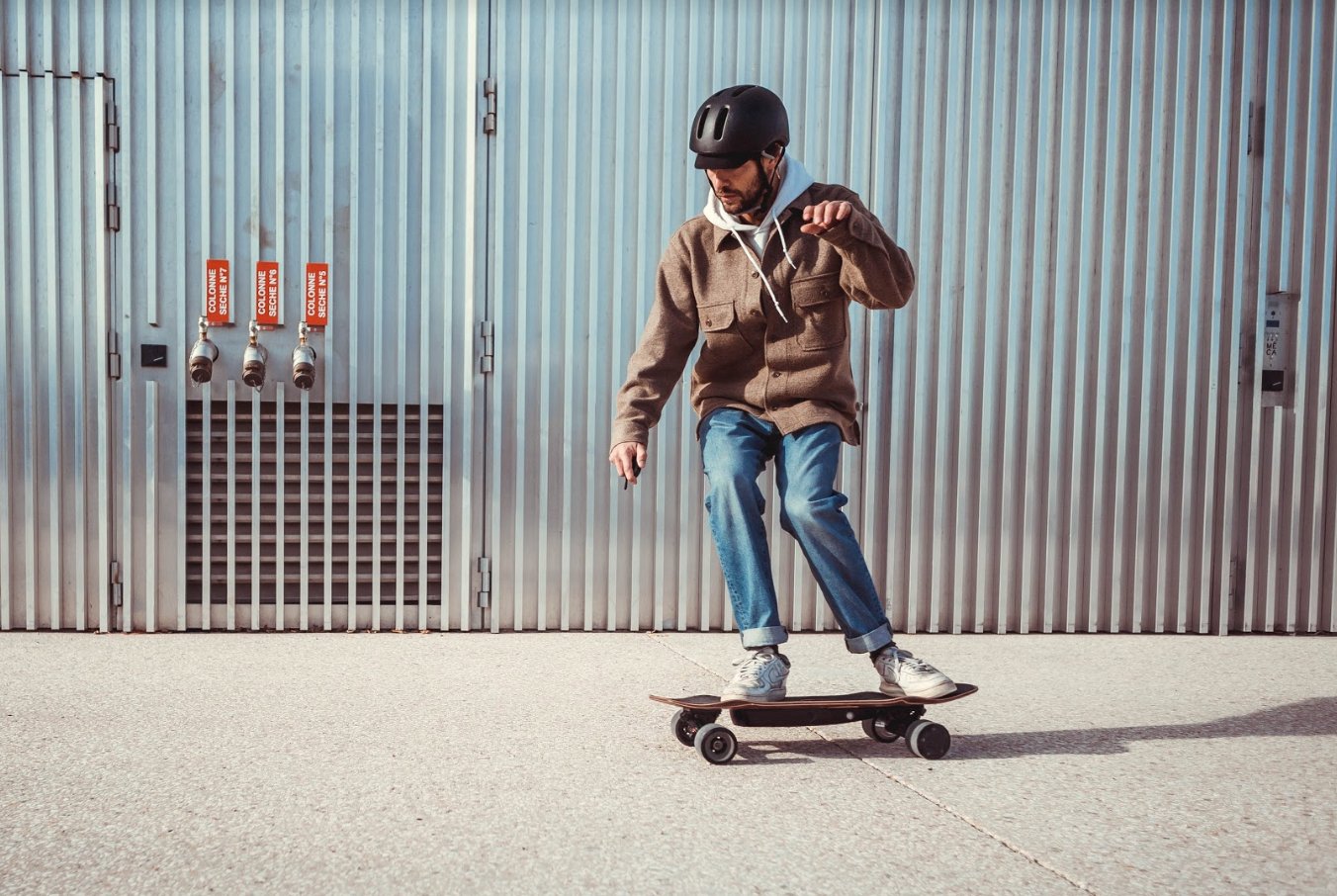
Can I ride an electric skateboard in my country? What are the rules?
The legal framework for electric skateboards can vary greatly depending on the country. In many countries, the legal framework simply does not exist yet. We try to provide an overview of the regulations in force by country, but keep in mind that this information is only a guide based on what we know and may not always be up to date. We will try to link sources so you can double-check.
If there is no legal framework for electric skateboards in your country, here are our recommendations:
Whenever possible, always ride on bike lanes. Otherwise, follow bicycle traffic.
Do not ride on sidewalks faster than walking speed. Avoid interfering with pedestrians.
Control your speed: always make sure to ride at a speed you would be comfortable with without the motors.
Anticipate as much as possible: the faster you ride, the longer it takes to brake and stop. Anticipate others’ behavior, knowing they may not anticipate yours.
Always yield to others (pedestrians, bicycles, cars, etc.): they may not have noticed your motorized skateboard and may not anticipate your movements.
Wear protective gear and make sure you are visible even in poor visibility conditions (front and rear lights, reflective clothing).
France
Decree #2019-1082 concerning Personal Mobility Devices – including electric skateboards – has been adopted. Riding electric skateboards in public places is now legal and regulated.
What are the rules for the rider?
You must ride on bike lanes. If there are no bike lanes, you may ride:
On roads with a speed limit of 50 km/h
In pedestrian zones, provided you ride at a moderate speed (6 km/h) and do not disturb pedestrians.
Riding on sidewalks is prohibited unless authorized by the mayor.
You may also ride on private paths.
Parking on sidewalks is allowed as long as it does not obstruct pedestrians. However, the mayor may decide to prohibit it.
You must be at least 12 years old and ride at a maximum speed of 25 km/h. The vehicle can only carry one person at a time.
The rider must wear retro-reflective gear at night or in poor visibility during the day.
Users must have liability insurance. This insurance covers damages caused to others (pedestrian injuries, property damage to another vehicle, etc.). It is recommended to contact your insurer to adjust your home insurance policy or take out a specific insurance policy.
What are the rules regarding the vehicle?
Vehicle regulations are currently being validated by the Central Standardization Committee (NF EN 17128).
From July 1, 2020, your board must be equipped with a braking system, a horn, front and rear lights, and a front reflector.
Although our current product recommendations (Nimbus and Halokee) exceed 25 km/h, we recommend using headlights and reflective strips on your board and avoiding the fastest mode in public places. We are making the necessary adaptations so that the POWERKIT complies: it will be equipped with reflectors, front and rear lights, a sound warning device, and will be limited by design to 25 km/h. We will also offer additional equipment to adapt it for competition use with maximized performance. This modification will make its use on public roads prohibited.
Source: https://www.service-public.fr/particuliers/vosdroits/F308
Denmark
Electric skateboards have been legal in Denmark since 1/1/2019. You must be over 15 years old, wear lights even during the day, and ride at less than 20 km/h.
Belgium
Electric skateboards are legal and classified like Segways. The rules are the same as for bicycles but you are limited to 20 km/h.
Sweden
Electric skateboards are in the same category as electric bicycles.
United Kingdom
Electric skateboards are currently not regulated. Electric scooters, Onewheels, and Hoverboards are banned in public places.
Norway
Electric skateboards are in the bicycle category. You are limited to 20 km/h, must wear reflectors and lights, have a sound warning device, and brakes. You do not need specific insurance.
Germany
Electric skateboards are still banned in public places in Germany. The government is working on regulations that could include electric skateboards in the coming months.
Spain
In Spain, it depends on the city’s rules. For example, electric skateboards are allowed in Barcelona, which is an ideal place for cycling.
Italy
Italy limits the speed of electric skateboards to 30 km/h. They are allowed in pedestrian zones, sidewalks, roads, and bike lanes unless a city decides otherwise.
Netherlands
Currently, electric skateboards are banned in public places.
Share: