


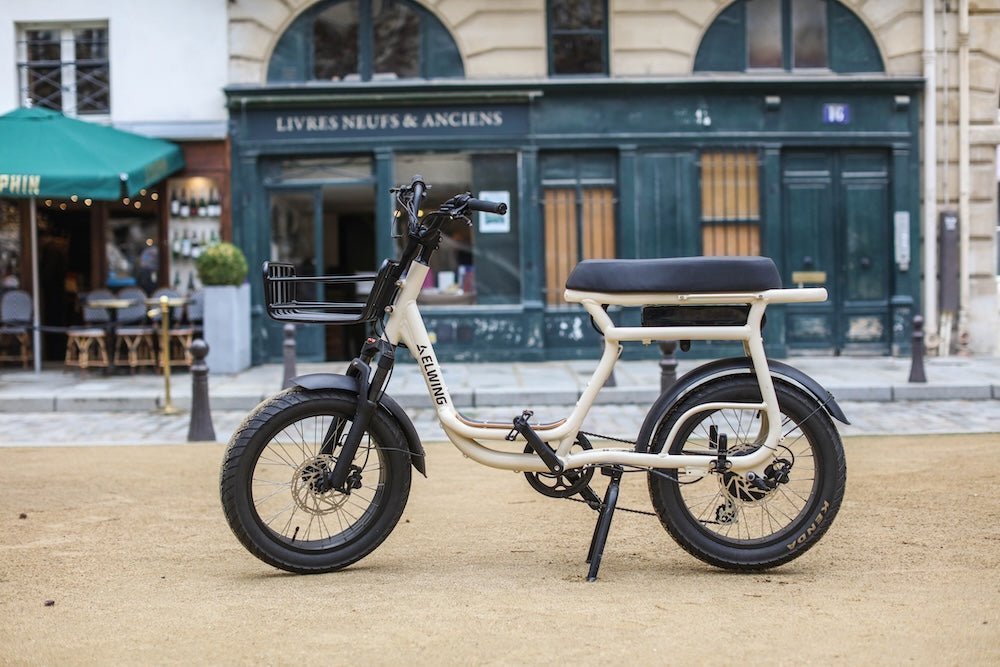
Did you know? A marked bike is 4 times more likely to be recovered if stolen! A real advantage for riding with peace of mind.
If you just bought a new or used bike in a store, you’ve probably heard about mandatory marking.
What is it really for? How do you get it? How much does it cost?
Don’t worry, we explain everything in this article so you’ll be an expert on marking and stand out.
Bike marking: what is it?
Marking is simply the mandatory identity card of your bike (classic or electric), purchased new or used.
It consists of engraving or affixing a unique 10-character identifier on your bike frame. This identifier, which includes the owner’s details, is registered in the FNCI (National File of Identified Cycles), a national database accessible notably to law enforcement, and managed by the APIC (Association for the Promotion and Identification of Cycles and Active Mobility).
It can take different forms: sticker, engraving, or welding attachment.
This is a measure provided for by the so-called LOM law (Mobility Orientation Law) which applies only to professional sellers.
This means that any bike purchased from a professional seller is systematically marked before being sold.
You may have missed it, but the measure was approved a few years ago and came into effect in two stages:
- From January 1, 2021, for new bikes
- From July 1, 2021, for used bikes
Note that before this date, bikes already in circulation could of course be marked.
Not all bikes are subject to this regulation; here are those for which marking is not mandatory:
- Children’s bikes with wheels smaller than 16 inches (including balance bikes)
- Bikes for public use or short-term rental (city bikes like Vélib’ or hourly/daily rentals, etc.)
- Certain specialized or professional bikes (competition bikes) used exclusively for sports
- Bikes sold between private individuals: a private seller is not required to have the bike marked before the sale. However, it is strongly recommended to do so to secure the transaction on one hand, and to facilitate tracking in case of theft on the other.
Example of bike marking:

Why this measure?
This measure came into effect following a sharp increase in bike thefts (correlated with the growing popularity of cycling).
The goal of this measure is therefore twofold:
- Deter bike thieves from acting, because it is then easy to prove they are not the real owners. Not to mention that a marked bike is less attractive… because it is harder to resell!
- To be able, thanks to quick identification of the owner by law enforcement, to return the bike more easily in case of theft.
How to have the marking applied?
As mentioned earlier: bikes are already marked at the time of purchase from a professional seller, so you do not have to do it yourself.
Marking is indeed a process regulated by the State that must be carried out by authorized operators, so you cannot do it yourself.
The different types of bike marking
Engraving
The bike’s identifier is then engraved directly on the bike frame.
Engraving slightly penetrates the metal or carbon without compromising the bike’s strength.
Advantages:
✅ Very durable over time, does not fade.
✅ Difficult to remove without damaging the bike.
Disadvantages:
❌ Not always suitable for carbon frames (risk of weakening).
❌ Less aesthetic than other solutions.
Ultra-resistant adhesive label (or sticker)
This is a label with a QR code that is stuck on the bike frame.
It is designed to resist weather and attempts to tear it off.
Advantages:
✅ Compatible with all materials (aluminum, steel, carbon).
✅ Easy to apply and does not damage the bike.
Disadvantages:
❌ Less durable than engraving.
Welding
This is a high-performance resin injection that chemically bonds the identifier to the bike.
Next, it is up to the bike owner to create a free account on the operator’s server before entering all useful information about the bike: brand, model, serial number…
Advantages:
✅ Very resistant to weather, friction, and attempts to erase it.
✅ Discreet, does not alter the appearance of the frame.
Disadvantages:
❌ Irreversible, the marking cannot be removed without damaging the frame.
❌ May weaken some lower-quality carbon frames.
Chemical marking (invisible to the naked eye)
This is a marking visible only under UV light, and therefore invisible to the naked eye, made using a chemical product.
Advantages:
✅ Very discreet, does not affect the bike’s aesthetics.
✅ Difficult to remove completely.
Disadvantages:
❌ Less deterrent, as it is invisible.
❌ May require specific equipment to be verified.
If you want more details about the different types of marking, you can browse this dedicated article.
What steps should you follow when you want to buy a bike from a private seller?
When buying a bike from a professional, as you understand, your contact details and the bike description will be automatically recorded in the national database.
You will then receive an email from the authorized operator inviting you to create or complete your account. This ensures traceability and facilitates future management of your bike.
However, if you want to buy your bike from a private individual and it is marked, it is strongly recommended to check beforehand that the bike is not stolen by verifying the FNUCI code status on the APIC website.
Once this step is completed, also make sure the seller properly transfers ownership to your name in the FNUCI (you will receive an email confirming you are the new owner of the bike).
Thus, if you want to sell your bike (or give it away), the process is the same: log in to your authorized operator’s website to request the transfer of ownership. An email will be sent to the new owner, who will then need to create an account with the operator to accept their new status.
If the bike is not marked, ask the owner for proof of purchase, then proceed to have it marked by an authorized operator to become its legal owner.
Marking at Ritmic
In response to regulations, all bikes purchased on our website are automatically marked.
For our electric bikes, the authorized operator is ICA Bike (Auvray Security), or Bicycode depending on the year (switch to Bicycode in 2026).
When preparing your order, the unique identifier placed on the bike frame is recorded in the FNCI and linked to your order.
Once your bike is delivered, you will receive an email containing your FNCI registration certificate.
If this is not the case, we can provide it upon simple request.
If you buy your bike from a Ritmic dealer, they will be responsible for registering your bike in the national database. In this case, the marking is not done by Ritmic, and it is then up to the dealer to carry out this essential step. We therefore recommend that you check that the marking has been properly done by the dealer at the time of bike delivery.
Is marking effective against bike theft?
It’s difficult to have exact figures on this subject. One thing is certain: marking, although mandatory in the cases mentioned in this article, remains a preventive and deterrent measure. It goes without saying that good protection of your bike is essential daily: also check out the most effective locks and anti-theft devices according to your bike!
In any case, if you find that your bike has been stolen, here’s what you should do:
- Declare the theft on the website of the operator who marked your bike and who is directly linked to the national FNCI platform
- Report the theft to the authorities by providing them with the marking number to help recover it
- Monitor resale platforms such as Le Bon Coin, Facebook Marketplace, e-Bay, etc.
What about additional insurance?
Marking your bike is already a good first step in theft prevention!
But bike marking will be especially useful in this specific case.
Beyond theft, and because purchasing a bike can be an investment, we also advise you to choose comprehensive and lasting protection to enhance the security of your new companion by subscribing to insurance in case of:
- accidents to cover material and human damages
- breakdown
- maintenance or repairs to be done
Today, the best way to ride with peace of mind is to subscribe to bike insurance. Ours, offered through our partner Estaly, is easy to activate, responsive in case of a claim, and supports you effectively. Discover all the benefits of our bike insurance here.
Find all our advice on this topic in our blog.
Conclusion
The moral of the story? An unmarked bike is like a passport without a name: if lost, it’s almost impossible to recover!
Beyond complying with regulations, mandatory bike marking is essential, and the good news is that it’s very easy to obtain: the professionals from whom you buy your bike, new or used, will take care of it.
Any questions? The Ritmic customer service team is here to advise you as best as possible!


Share: