


How to transport children by bike? Practical guide and tips for riding with peace of mind.
There are many solutions for transporting your children on a regular bike, electric bike, Cargo or longtail. Here you will find tips and best practices to enjoy your rides safely!
Always make sure to install the transport equipment correctly, follow safety rules, and wear a helmet for both you and your child or baby.
Equipment
Before choosing a solution to transport your child or baby on an electric bike, it is essential to consider your child's age, size, weight, and needs, as well as your own preferences for riding and comfort.
Here are solutions and models for transporting children:
The front baby seat
The front seat is suitable for babies from 9 months to 3 years old weighing less than 15 kg.
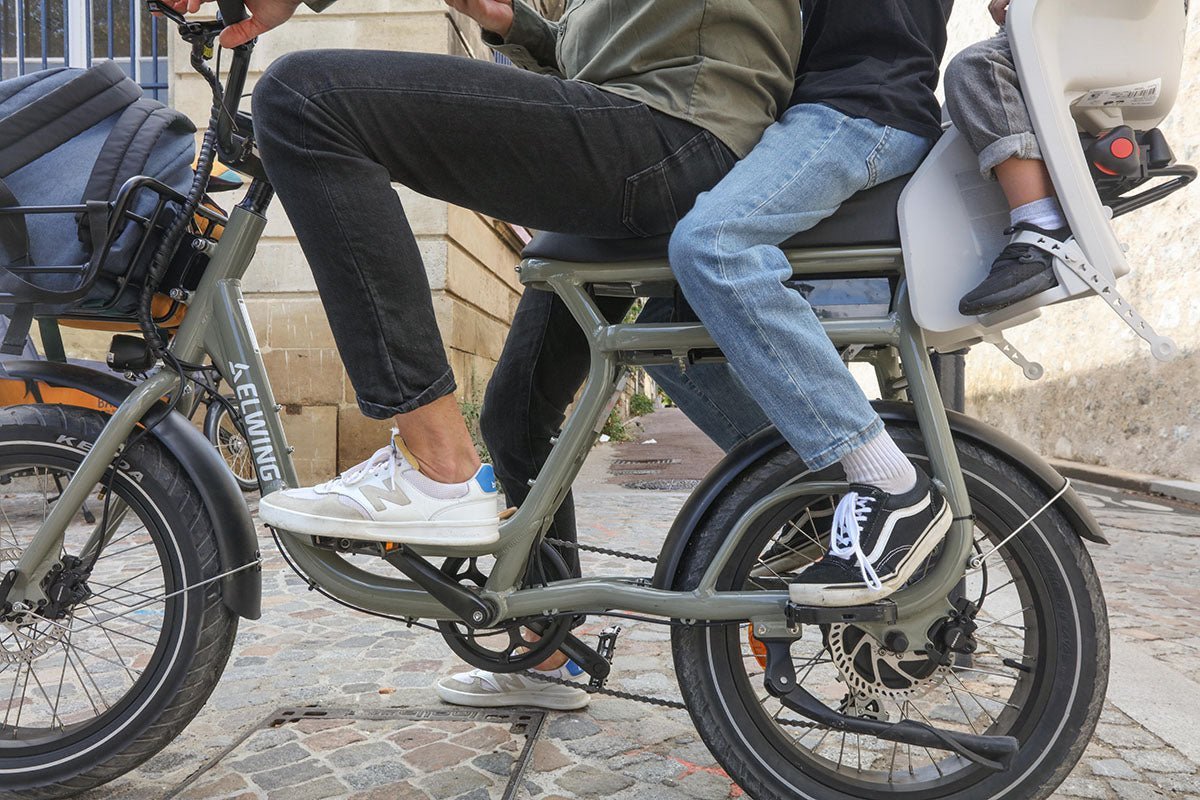
Front child seats are attached to the front top tube of the bike frame. This allows the parent to keep an eye on the child during the ride. These seats are generally designed for smaller children. Front seats come with footrests and a bar for the child to hold onto. The front seat leaves the rear rack free.
You can find a suitable seat model on our website: here.
The rear child seat
The classic rear seat is suitable for children up to 6 years old and weighing up to 22 kg.
Child seats at the back of the bike are attached to the rear rack. They are designed to safely carry a child. There are baby seats suitable for toddlers and seats for older children.
There is also a mounting system on the seat tube for bike models without a rear rack or those that are not suitable.
You can find a suitable seat model on our website: here.
Two-seater saddle
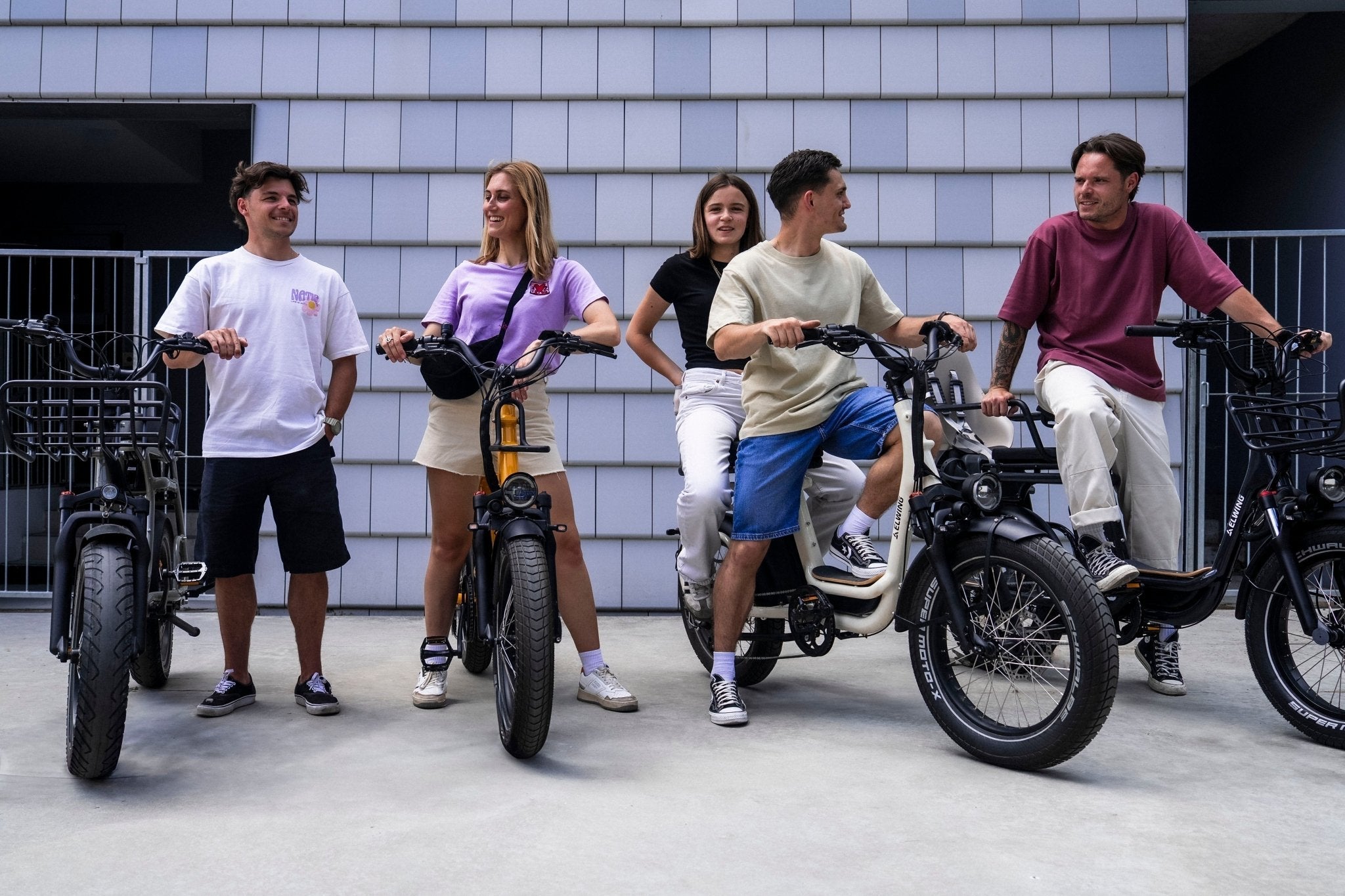
Junior seats are available as accessories. These junior seats attach to a rear rack and accommodate older children. However, some electric and cargo bikes like the Elwing Yuvy come with an integrated two-seat saddle that allows adults or children to ride very comfortably.
The child must sit on the two-seat saddle with their feet on appropriate footrests. Elwing’s two-seat cargo bike is equipped with footrests that allow the installation of a child at least 1.5 meters tall.
Trailer

A child trailer is a small two-wheeled trailer that attaches to the back of the bike. Trailers are accessories that combine comfort and practicality.
It can generally carry one or two children or babies comfortably. Child trailers offer extra space to store luggage, food, and other supplies for family outings. Trailers also allow the rear rack to remain free.
To ride safely, children and babies in the trailer must wear helmets.
The Elwing Yuvy allows you to install a trailer hitch system as an accessory, available here.
Other types of bikes
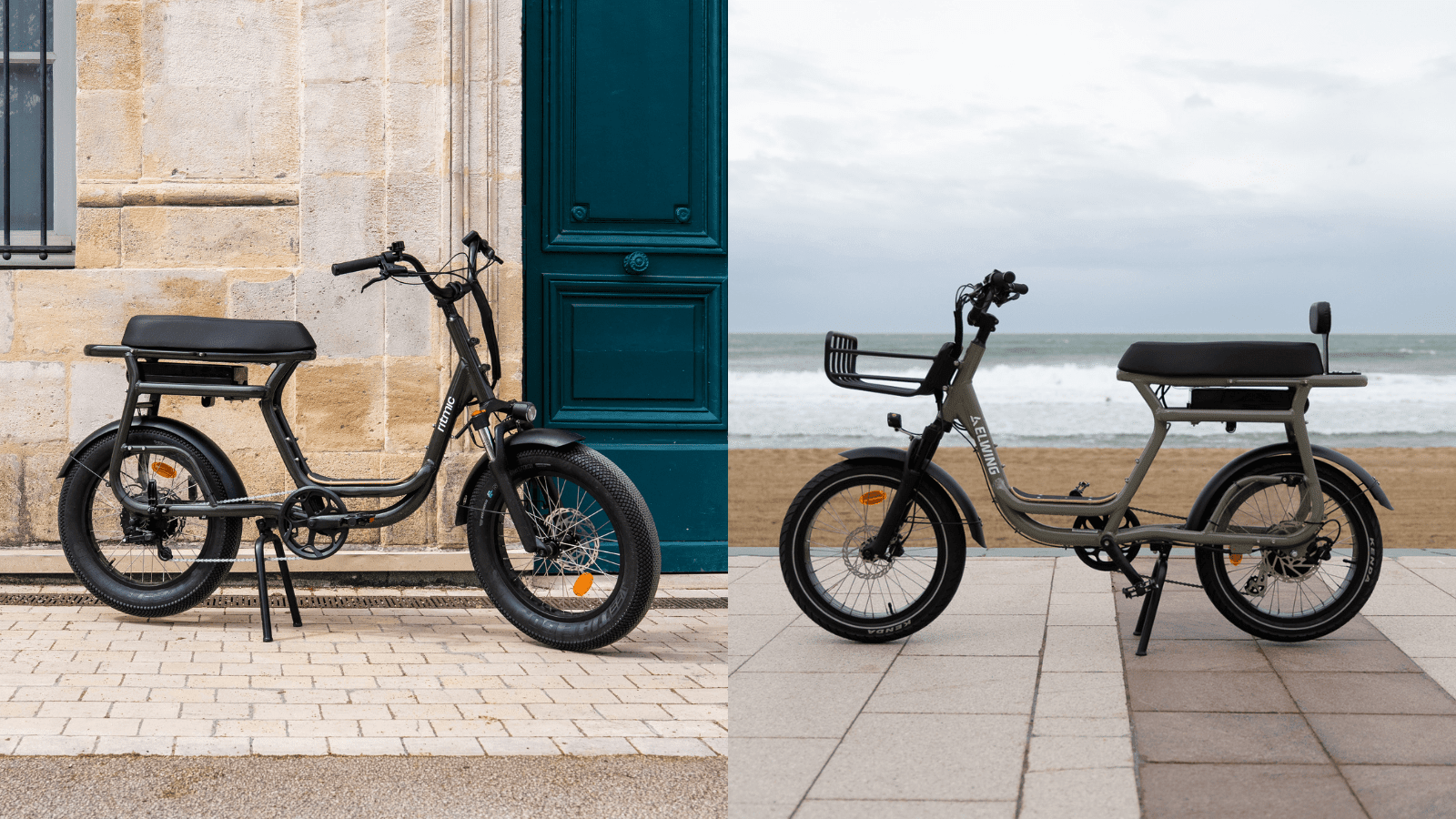
There are also cargo tricycle bike models with two wheels at the front or two-wheeler bikes with one wheel. However, a tricycle or two-wheeler is less maneuverable and bulkier than a compact and modular electric bike. The two front wheels of the tricycle can be inconvenient when riding or parking. The single wheel of the two-wheeler can cause stability issues. Longtail bikes equipped with a bar around the rear seats are also available on the market.
Make sure to choose the type of vehicle that suits your needs.
Safety and best practices: how to equip yourself properly?
Carrying children by bike can be a practical and fun option, but it is essential to do so safely. Electric bikes are often seen as more dangerous than regular bikes, but they are not when used responsibly. Here are some tips for trips with children by bike in the city or outside urban areas. Here’s how to secure your rides.
Wear a helmet

Both you and your child must wear a certified bike helmet every time you ride. Make sure your child's helmet fits properly, is correctly adjusted, and securely fastened. A helmet that is the wrong size or poorly fastened loses all protective value.
Regardless of your age or experience, helmets are essential accessories for riding safely on the road, in the city or outside urban areas.
Balance the load
When installing a child seat or baby seat on the back of your bike, make sure the load is well balanced to avoid destabilizing the bike.
The Elwing Yuvy is equipped with a center stand that allows you to park safely.
Ensure visibility
Add rear lights and reflectors to your bike or longtail to be visible, especially in low light. The Elwing Yuvy is equipped with brake lights that make you clearly visible to other road users and automatic lighting that turns on in low light.
You can also wear a yellow safety vest for better visibility.
Follow the rules of the road
Follow traffic rules, including stops and traffic lights. Ride carefully, considering traffic and using bike lanes if available.
Teach your child bike safety rules, such as wearing a helmet, obeying traffic lights, and being cautious when getting on and off the seat.
Be aware of your surroundings whether you are in the city or countryside, watch the traffic, and avoid dangerous situations. Ride at a speed that ensures your child's safety.
Prepare for bad weather
In case of rain, wind, or bad weather, make sure your child is properly protected from wind and water with a cover, skirt guard, or raincoat.
It’s essential to take all necessary precautions to ensure your child’s safety while biking. By following these tips and using the right equipment, you can enjoy family bike rides safely.
Advantages
Transporting children by bike offers many advantages for both parents and children. Here are some of those benefits:
A bit of exercise!
Transporting children by bike is a way to stay active and fit. It’s a great chance to include exercise in your daily routine, contributing to better overall health.
A shared moment
Time spent biking with your children promotes family closeness. It’s an opportunity to talk, laugh, and share precious moments together.
Respect for the environment
Biking is an eco-friendly mode of transport with no polluting emissions. By using a bike instead of a car to transport your children, you help reduce your carbon footprint.
An economical solution
Biking is much less expensive than most other forms of transport, especially cars. You’ll save on fuel, maintenance, and parking costs.
Time savings and stress reduction
In some situations, biking can be faster than driving, especially in congested urban areas, as you can avoid traffic jams and find parking more easily.
Biking is often seen as a less stressful mode of transport compared to some other options like driving a car. Pedaling can help reduce stress related to traffic and parking issues.
In summary, transporting children by bike is a solution that offers many benefits, especially for health, the environment, the economy, and strengthening family bonds. It is essential to do so in a safe setting to maximize these benefits.
Safe travels! ✌️✌️✌️

Share: