


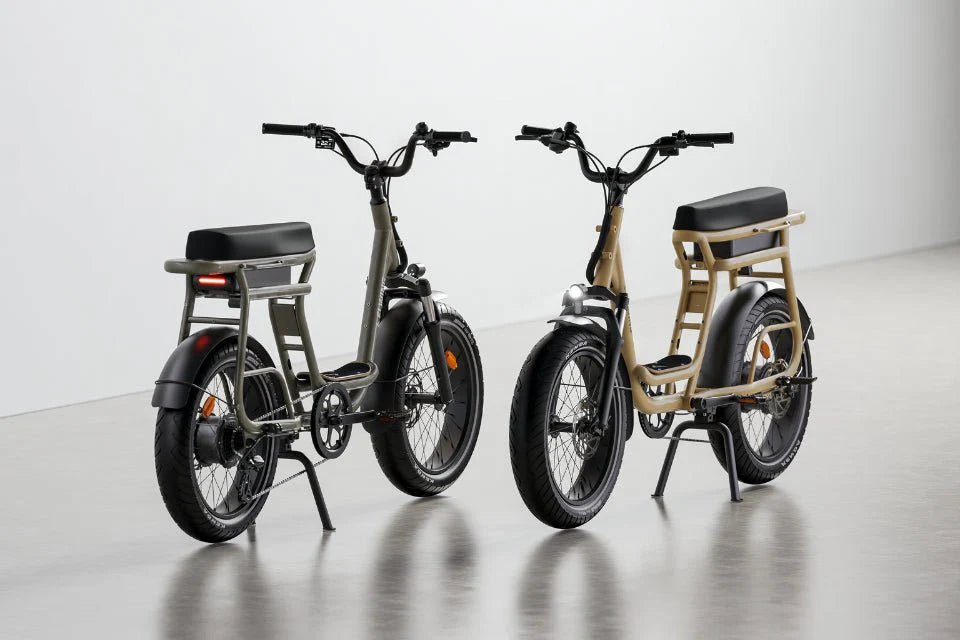
An Electric Bike: How Does It Work?
Electric bikes are hybrid vehicles that combine the energy delivered by a cyclist’s pedaling with the power of a motor to move forward.
Although very common in urban areas in recent years and seen as a mode of transport for the future, the very first electric bike patent was actually filed in 1895.
Due to the limited battery life at the time, it was long overlooked in favor of mopeds or cars. Interest has resurged since the 2000s with battery improvements, and it has recently exploded thanks to a combination of technological, environmental, economic, and social factors: the development of soft mobility, city congestion, ecological issues, government incentives…
But what exactly is an electric bike and how does it work?
What is an E-bike (electric assisted bike)?
The NF EN 15194 standard governs the design of bikes and the application of safety controls on them. It also defines the main criteria that clearly distinguish an electric assisted bike from a moped.
3 essential criteria to identify an electric assisted bike:
- the electric assistance activates when pedaling;
- the electric assistance cuts off as soon as the bike exceeds 25 km/h (15.5 mph);
- the motor power must not exceed 250 watts.
How does an electric bike work?
How does an E-bike (electric assisted bike) move forward? What is its operation?
Components of an E-bike
Electric bike models vary, but they share the following functional components: a battery, a controller, a motor, a display (screen), and a sensor.
-
The Motor
The motor is the heart of the electric bike. There are different types of motors. The motor can be located in the front or rear wheel (hub motor) or in the crankset.
A crankset motor provides a more gradual assistance, whereas a wheel motor is more direct. The wheel motor is better suited for city use.
-
The Battery
The battery (lithium for the Yuvy) powers the electric bike’s motor. Batteries are rechargeable, recyclable, and their range can vary depending on the battery model chosen. Long-range batteries offer a higher level of autonomy.
-
The Sensors
The sensor, which can be a pedal sensor or a torque sensor, is a system that triggers and determines the level of assistance.
It is this sensor that sends the signal to the controller and motor that the bike is moving.
-
The Controller
The controller processes the information sent by the sensors and transmits it to the motor to activate it if the bike is equipped with a pedal sensor in the crankset, or adjusts its power based on the effort if the bike has a torque sensor.
-
The Display
The display shows information such as battery level, speed, or the desired assistance level.
Position of these components on the Elwing Yuvy (electric bike diagram):

FAQ:
- Do you have to pedal on an electric bike? The assistance on an E-bike activates when pedaling, unless it is equipped with a throttle.
- Is it complicated to use? An E-bike is very easy to use and does not require a license, special skills, or being an experienced cyclist.
- Can you go faster than 25 km/h? The assistance on electric bikes cuts off at 25 km/h (15.5 mph). However, it is entirely possible to exceed this speed with a strong pedal push and a tailwind.



Share: