


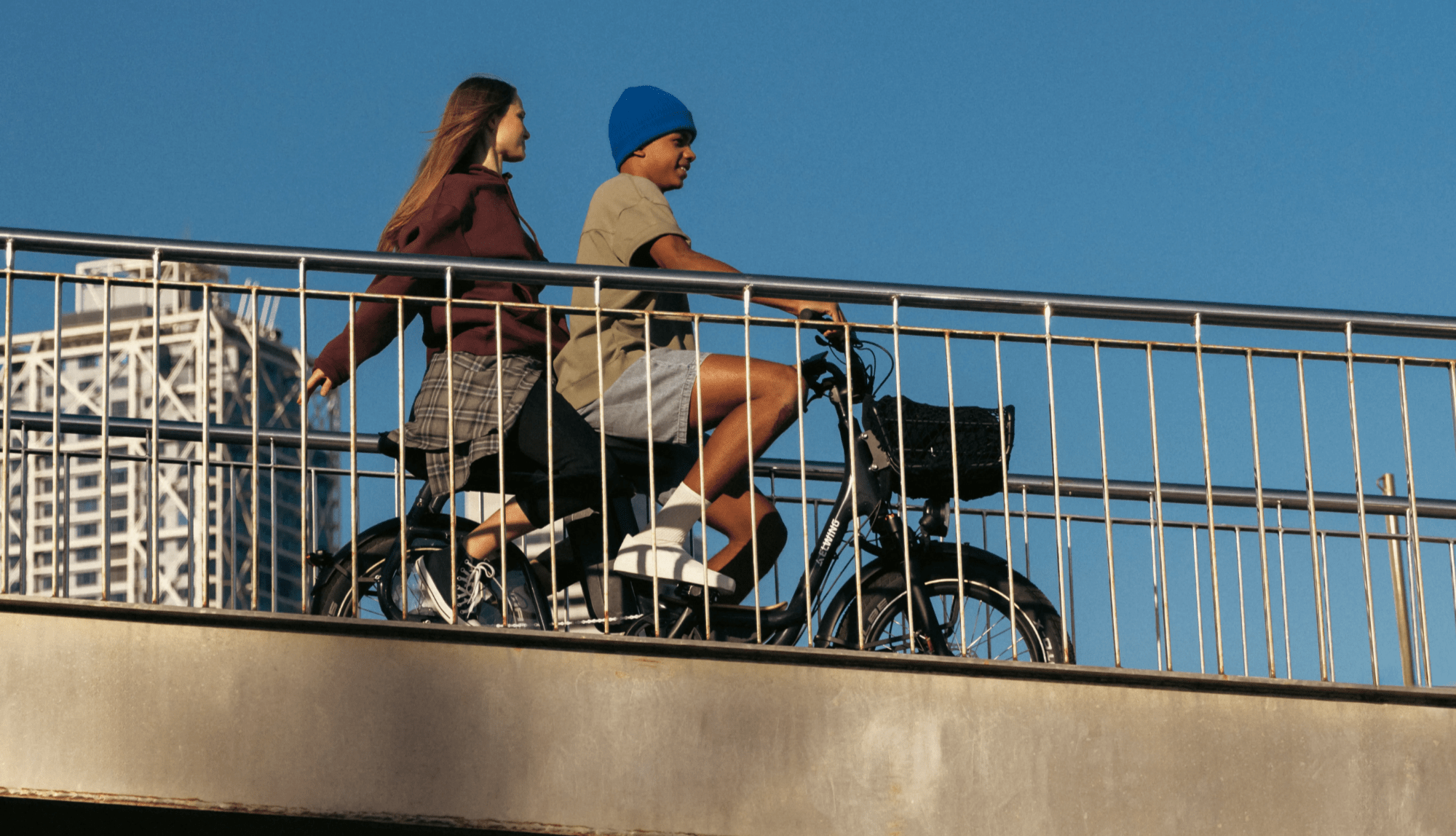
In recent years, electric bikes (E-bikes) have attracted more and more cyclists. However, their mode of operation can intimidate beginners used to traditional bikes..
It is therefore natural to ask some questions before getting started: is it easy to handle? How to use it safely when you are a beginner?
In this article, we guide you step by step for an easy and successful start: with a few simple tips to apply, you will be able to ride with confidence, combining comfort, efficiency, and safety.
5 tips for a great first electric bike experience
1 - Choose the electric bike model that fits your needs

For every user and need, their electric bike.
To take advantage of the many benefits of an electric bike, it is crucial to choose the model that fits your needs. The electric bike market has developed well, so you will undoubtedly find the perfect fit. The market offers several models, some with different speeds to adapt to road conditions and the varied needs of users.
Thus, when buying, it is essential to consider many criteria:
- Type of electric bike: depending on your use, the type of bike will be very important. Cargo bikes, for example, allow adding child seats which are very useful for family use.
- Bike weight: an electric bike weighs between 15 and 45 kg. If you need to carry it up stairs or store it indoors, a lighter model (under 22 kg) will be preferable.
- Wheel size and saddle height: the frame shape and wheel size play a big role in bike handling. It is very important to consider this especially in urban environments. Refer to the table below to find which tire size best suits your needs:
| Tire size | Advantages | Ideal for… |
|---|---|---|
| 20 inches | Stable, maneuverable, smooth and light | City, paved roads, sidewalks, tram rails, cobblestones, bike lanes |
| 26 inches, narrow width (1.75”) | Light, fast, maneuverable | City, paved roads |
| 26 inches, wide (2.1” or more) | More comfort and grip | Mixed paths, cobblestones |
| 27.5 inches | Good balance of handling/comfort | City and trails |
| 28 inches (700C) | Smooth rolling, ideal for long trips | Bike lanes, hiking |
| Wide tires (3” and above, Fatbike type) | Excellent stability, does not sink into sand or snow | Rough paths, beaches, snow |
In the city, opt for wide and reinforced tires to avoid getting your wheel stuck in tram rails or cobblestones.
-
Battery range: how many kilometers can you travel before recharging? Are there removable battery options?
In urban areas, theft is known to be one of the main issues and a barrier to purchase, so it is advisable to find out how you can carry your battery or secure it on the bike.
In any case, if you carry heavy loads or make long trips, opt for a 700Wh battery or higher.
-
Motor power:
Limited by European legislation to 250W, motor torque (Nm) varies depending on the models. It plays a role in the bike's ability to climb slopes and start quickly, so choose the power suited to your trips:
Motor power Motor torque (Nm) Recommended use 250 W - 30 to 40 Nm Low Flat urban trips, light assistance 250 W - 50 to 60 Nm Medium City and hilly roads, moderate mountain biking 250 W - 70 to 85 Nm High Mountains, rough terrain, heavy cargo bikes -
Assistance level: an e-bike generally has several assistance levels that affect the motor power, and therefore the effort you need to provide. For example, we have redesigned our assistance modes to offer you a better experience with our Ritmic range. Below is the description of each mode:
- Pedestrian Mode: Hold the "-" button to activate walking assistance. It deactivates as soon as you release the button.
- Mode 0: Assistance disabled
- Eco Mode: Electric pedal assistance up to 15 km/h with power limited to 75w out of the 250 available. This mode allows you to reach the maximum advertised battery range.
-
Tour Mode: Electric pedal assistance up to 20 Km/h with a motor power of 88w out of the 250 available. This mode allows you to ride on bike paths when there is traffic.
For the last 3 modes, pedal assistance supports you up to 25 km/h. The difference between the 3 modes is reflected in the motor power delivered:
- Sport Mode: Electric pedal assistance up to 25 Km/h. Motor power limited to 40% of its max power.
- Sport+ Mode: Assistance up to 25 Km/h. Motor power limited to 60% of its max power.
- Boost Mode: Assistance up to 25 Km/h. Motor power at 100%.
-
Load capacity: depending on how you plan to use it, it is important to consider this criterion and check the weight limit supported by the bike and its racks.
Our Yuvy 2 or our Ritmic models, for example, can carry up to 180 kg (bike + load)!
-
Comfort and stability: a kickstand is essential to prevent the bike from tipping over when placing or removing a child from the bike. A central kickstand, for example, offers better stability, especially when carrying a child or loads: it distributes the weight better and secures handling when stopped.
-
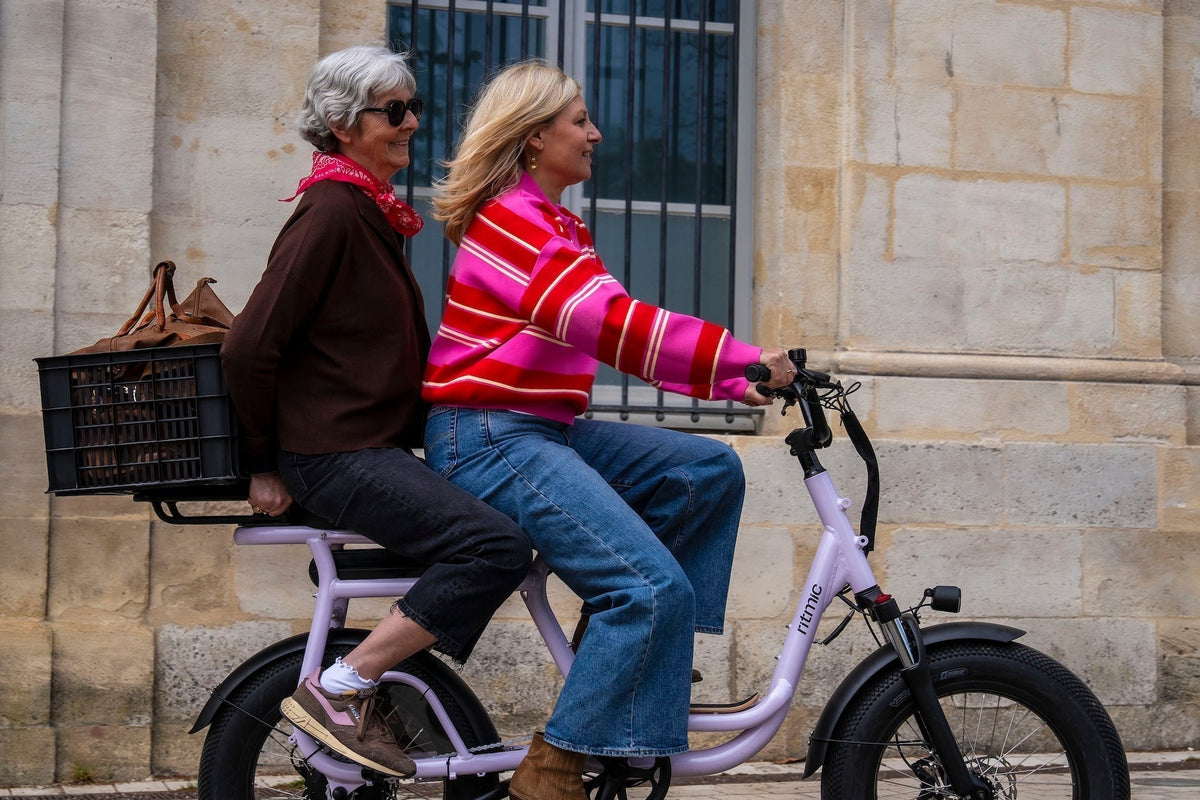
Frame type: open frames ("step-through") make it easier to get on and off the bike, especially if you carry a passenger (convenient for women wearing skirts or if you carry a child on the back!).
-
Riding position: some models offer a more upright position and a handlebar closer to the body, reducing fatigue on the arms and back.
-
Suspensions: they are often overlooked but crucial for comfort in the city, where speed bumps, manhole covers, cobblestones, and sidewalks can cause jolts.
If you want to go further on the subject, feel free to consult our complete pre-purchase guide.
2 - Test electric bike models in real conditions

© You will look good
Nothing beats testing the model you have spotted before buying it.
This will allow you to check that you feel comfortable once seated on the bike and to try it in the way you will use it.
Where to test them?
At stores and dealers specializing in electric bikes, where you can try different models.
During your test, check these elements to make sure the chosen model suits your needs:
- Riding comfort: is the position comfortable?
- Electric assistance: how does it activate? Is it smooth? What are the different modes available? Both for walking alongside your bike and for climbing hills?
- Braking: is it gradual or too abrupt? Is it powerful? These are essential questions to ensure your safety, especially when carrying a child.
- Step-over height: is it easy to get on and off the bike, especially with one or more passengers?
- Capacity and weight: is the bike suitable for family use? If you plan to use the bike with several people, we recommend testing it all together. Handle the bike with your children to ensure your comfort.
- Kickstand: check the stability of your bike when stopped? Especially for a longtail with passengers in the back?
- Battery: are there different capacities? What is its range?
- Suspension: does the bike absorb shocks well?
At Ritmic, we have many trusted distributors throughout France, and you can also visit us at Darwin (Bordeaux by appointment).
Our partners are carefully chosen to provide you with the best local service: free trials, professional advice, sales, rentals, maintenance, and repairs.
Don’t hesitate to book an appointment in just a few clicks with one of our Ritmic representatives closest to you thanks to the complete list of stores selling our products: our store locator map.
In any case, take the time to try several models and compare their features to find THE bike that suits you best!
3 - Get familiar with your electric bike after purchase
For an easier and quicker grip on your e-bike, here are some useful tips for any beginner user to get comfortable:
Practice in a safe place
An electric-assist bike behaves slightly differently from a normal bike. The goal is to familiarize yourself with the bike’s handling and its assist without stress.
Mastering the bike’s balance and weight
As mentioned above, an electric bike weighs on average between 15 and 45 kg, which is much more than a regular bike. This weight difference is mainly due to the presence of specific components (battery, motor…).
Worried about this? Our users share their experience with the handling of our Yuvy 2:

Learning to manage the electric assist
As a beginner user, start first with the lowest assist mode to get used to the bike. Test the different levels to see how they affect speed and the effort required (fatigue, elevation).
Of course, it is also perfectly possible to disable the assist and then ride your bike… like a regular bike. However, keep in mind that the weight of the e-bike can make it harder to handle than a regular bike without a motor.
And the assist: how does it work? Are you at risk of starting off too fast because it activates immediately?
No, rest assured, the electric assist only works if you pedal. However:
- Some models start with a slight delay to avoid a "whip effect."
- It is recommended to start with assistance at the lowest level for a smooth start.
Learn to manage braking
Braking is different from a regular bike; it is more powerful because e-bikes are equipped with hydraulic or mechanical disc brakes, which are more effective than rim brakes on regular bikes.
Take time to get used to your new electric bike.
In any case, this does not pose any particular risk if you follow the following advice:
- Brake gradually, starting with the rear brake, then modulating the front brake.
- Anticipate your stops more, because the bike’s weight and electric assistance can increase braking distance. We therefore recommend slowing down before turns and cutting assistance when approaching stops.
💡 Tip: test your brakes in a safe area before riding in the city or on the road.
Check the battery and range
Monitor your battery’s charge level and think about optimizing its range (avoid sudden accelerations, choose the right assistance mode, etc.). Also consider using the mechanical gears: managing them well, especially at startup, helps relieve the motor and save battery.
To avoid running out of battery, here are some tips:
- Monitor the charge level via the control screen
- Adjust the assistance mode: stay in eco mode on flat terrain and use sport mode only uphill if you need a boost
- Avoid sudden accelerations, which consume more energy
- Charge your battery regularly: do not let the battery fully discharge and keep it in good conditions
At Ritmic, the standard battery of the Yuvy 2 is designed with a range of up to 60 km under normal usage conditions (without too much elevation and at normal speed) and up to 120 km for the standard battery of our Ritmic models.
It is removable so you can recharge it at home and easily store it indoors.
Furthermore, by following a few simple tips, you can maximize its lifespan:
- Reduced use
- Storage at a temperature between 0°C and 20°C
- Storage with a charge level between 30 and 60%
- Electric bikes parked in the shade or in cool rooms
Conversely, some factors will negatively affect the lifespan of your battery:
- Heavy use
- Storage at a temperature above 30°C
- Extended storage in fully charged or fully discharged state
- Electric bike parked in full sun
- Starting at low temperature (<5°C)
More specifically, how to take care of your electric bike’s battery?
- Charge properly
Ideally charge it after each use. Avoid letting the battery discharge completely before recharging (10%), as this can reduce its lifespan.
- Store properly
When you do not plan to use your electric bike for an extended period, it is important to store the battery properly. Make sure it is charged to about 50% of its capacity and keep it in a cool, dry place. Remember to charge it regularly so the battery does not enter deep discharge.
- Monitor the temperature
Electric bike batteries work best at moderate temperatures. Avoid exposing them to extreme temperatures (very hot or very cold). Make sure the battery is not left in the sun for prolonged periods when the temperature is 25 °C.
- Have your bike serviced regularly
In addition to taking care of the battery, it is also important to have your bike regularly serviced by a qualified professional at a partner store.
4 - Adopt the right safety habits

© Charlotte Costa
Once you have chosen your bike model, apply these safety tips for riding in the best conditions.
And yes, did you know?
An e-bike can reach up to 25 km/h with assistance, so it is important to adopt good practices for 100% safe use:
- Equip yourself properly: wearing a helmet is of course highly recommended. Outside urban areas, a high-visibility vest or at least equivalent reflective gear must also be worn. At night or when visibility is poor, it is mandatory to have lighting both front and rear on your bike. Other complementary equipment is also recommended: the installation of mirrors and reflective strips.
- Brake gradually: with assistance, the bike can be faster than a regular bike. Use both brakes to slow down smoothly.
- Anticipate traffic: an electric bike lets you ride faster, even uphill. Be aware that other road users—drivers, cyclists, or pedestrians—are often not used to this speed for a bike. Clearly signal your intentions, anticipate their reactions as much as possible, slow down if necessary, and of course, obey traffic laws.
5 - Maintain your electric bike regularly
Last but not least: good maintenance guarantees the longevity of your e-bike and your safety.
Here are - among others - some simple steps to adopt:
- Regularly check tire pressure: a well-inflated tire improves range and comfort.
- Clean and lubricate the chain to prevent premature wear.
- Charge the battery properly and store it in a dry place to preserve its lifespan.
- Check the condition of the brakes to maintain control of your bike in all situations.
- Check that the lights are working properly to ensure your visibility.
Having your bike serviced once a year by a professional ensures that all components (motor, battery, brakes, transmission) are in perfect working order.
At Ritmic, for regular use of your electric bike and to optimize the lifespan of your riding companion, we offer the following complete maintenance schedule:

Conclusion
As you’ve probably understood, if you haven’t been an electric bike user until now and are considering making the switch, rest assured that getting started is accessible to everyone and just requires a bit of practice. By following the tips shared in this article, you’ll quickly gain confidence and be able to fully enjoy all the benefits of the e-bike.
So, ready to take the plunge?
Visit our website to discover our electric bikes.
And if you haven’t found the answer to your question in this article, don’t hesitate to contact our customer service team who will be happy to assist you!


Share: